
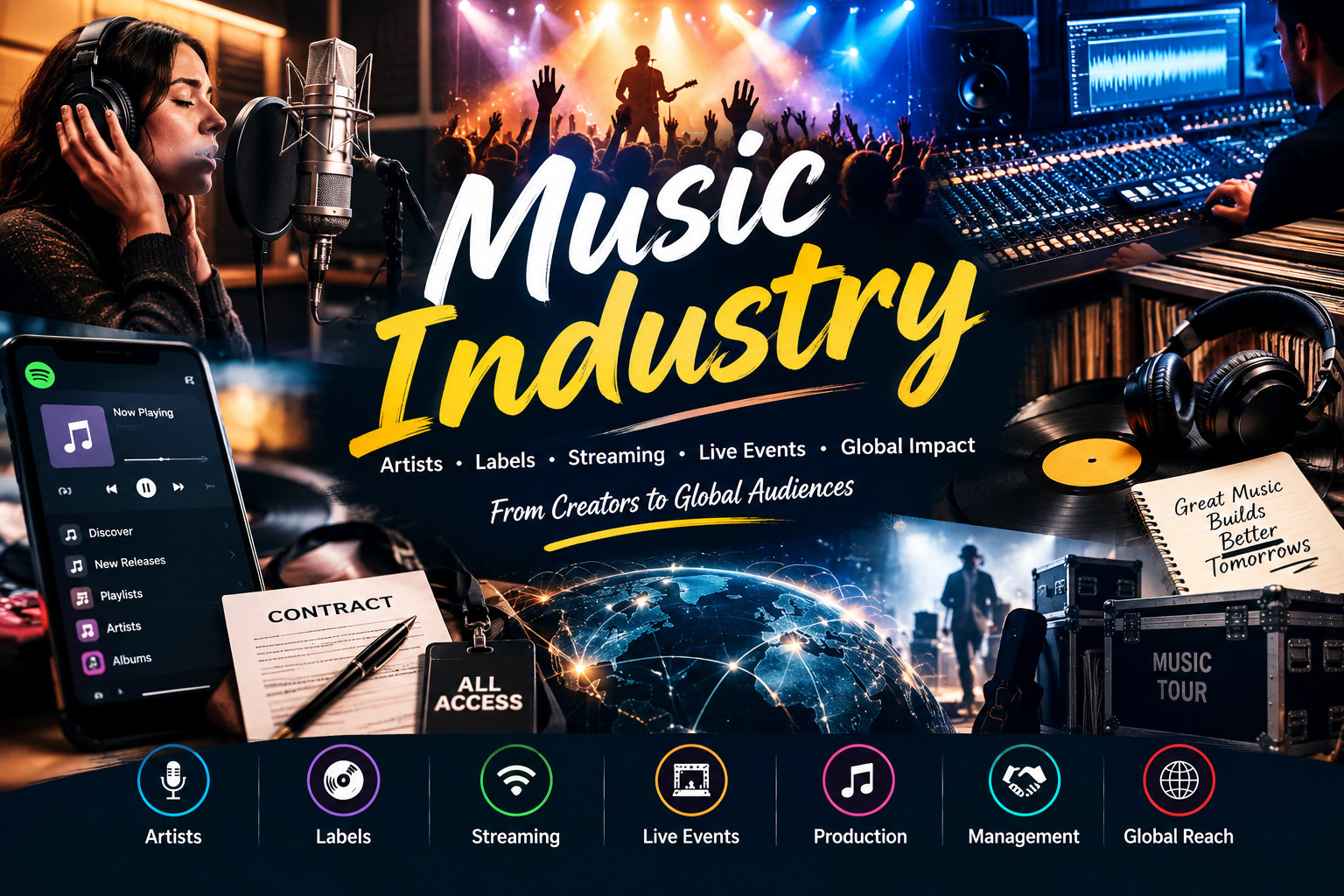
The music industry is one of the world’s most influential entertainment industries, connecting artists, singers, producers, record labels, streaming platforms, and millions of listeners. From traditional albums and radio broadcasts to digital streaming and social media, the way people discover and enjoy music has changed dramatically.
Today, the music industry provides opportunities for both established and emerging artists. Digital platforms have made it easier for singers and musicians to reach audiences around the world without relying entirely on traditional distribution channels.
What Is the Music Industry?
The music industry refers to the businesses, professionals, and organizations involved in creating, recording, distributing, promoting, and performing music.
It includes several important areas, such as:
- Music artists and singers
- Songwriters and composers
- Record labels
- Music producers
- Streaming platforms
- Concert and event organizers
- Music publishers
- Radio and broadcasting companies
- Digital music services
- Music marketing and promotion
Each part of the industry contributes to bringing music from an artist’s idea to listeners around the world.
How Has the Music Industry Changed?
The music industry has gone through several major transformations. In the past, physical formats such as vinyl records, cassette tapes, and CDs were important ways for people to purchase music.
Later, digital downloads changed how music was distributed. Today, streaming services have become a major way for listeners to access songs and albums.
The growth of smartphones and social media has also changed music discovery. An emerging artist can now share a song online and potentially reach listeners in different countries.
For more information about artists and singers, visit our Artists & Singers category.
The Role of Music Artists and Singers
Artists and singers are at the center of the music industry. They create and perform music that connects with audiences emotionally and culturally.
Modern artists can build audiences through multiple channels, including:
- Music streaming services
- YouTube
- Social media
- Live concerts
- Podcasts and interviews
- Music websites and blogs
- Digital releases
An artist’s career may involve collaboration with producers, songwriters, managers, publishers, record labels, and marketing teams.Music Industry: Trends, Evolution & Future of Musichttps://radioaudio.online/singer-biography/
Music Streaming and the Digital Era
Streaming has transformed the way people consume music. Instead of purchasing individual albums or songs, listeners can access enormous music libraries through online services.
Digital distribution also allows artists to release music to international audiences more quickly. This has lowered some of the traditional barriers between musicians and listeners.
Organizations such as the International Federation of the Phonographic Industry (IFPI) publish research and reports about the global recorded music market.
Social Media and Music Promotion
Social media has become an important promotional tool for the modern music industry. Artists can communicate directly with fans, announce new releases, share behind-the-scenes content, and promote concerts.
Short-form video platforms have also influenced how songs become popular online. A song can attract attention through a viral video, fan-created content, or a popular online trend.
Because of this, digital marketing is now an important part of many music campaigns.
The Business Side of the Music Industry
Behind every successful release is a business structure that helps manage production, distribution, promotion, and rights.
Some important areas of the music business include:
Record Labels
Record labels may provide artists with services such as recording support, marketing, distribution, and promotional resources.
Music Publishing
Music publishers help manage rights associated with musical compositions and can assist with licensing and royalty administration.
Live Music
Concerts, festivals, and tours provide artists with opportunities to perform for audiences and generate revenue.
Music Licensing
Songs can be licensed for use in films, television programs, advertisements, games, and other media.
The Importance of Music Copyright
Copyright is an important part of the music industry because it protects creative works and establishes rights for creators and rights holders.
Different rights can apply to a musical composition and to a sound recording. Understanding these rights is important for artists, producers, publishers, labels, and businesses that use music.
The U.S. Copyright Office provides educational information about copyright and music-related rights.
Global Music Industry Trends
The global music industry continues to evolve as technology and consumer behavior change. Some important trends include:
- Growth of music streaming
- Increasing use of social media for music discovery
- Independent artists releasing music directly
- Growth of international collaborations
- Expansion of live music and festivals
- Use of technology in music production
- Greater importance of digital marketing
These trends are creating new opportunities while also increasing competition among artists.
Independent Artists in the Modern Music Industry
Independent musicians have more tools than ever to create and distribute their work. Digital services allow artists to release music without necessarily working with a traditional record label.
Independent artists can use online platforms to:
- Build a fan base
- Promote new songs
- Sell merchandise
- Announce live performances
- Collaborate with other musicians
- Connect with international listeners
However, building a sustainable career still requires consistent content, effective promotion, audience engagement, and an understanding of music rights and business practices.
What Is the Future of the Music Industry?
The future of the music industry will likely continue to be shaped by technology, digital platforms, changing listener habits, and new forms of music promotion.
Artificial intelligence and other emerging technologies are already becoming topics of discussion across the creative industries. At the same time, human creativity, songwriting, performance, and connection with audiences remain central to music.
As technology develops, artists and music businesses will need to adapt to new ways of creating, distributing, marketing, and monetizing music.
Conclusion
The music industry has transformed from a business centered largely around physical recordings and traditional media into a global digital ecosystem. Streaming, social media, digital distribution, live events, and independent publishing have created new ways for artists to connect with audiences.
Whether you are an established singer, an emerging musician, or simply a music fan, understanding the modern music industry can help you appreciate how songs move from creation to audiences around the world.
For more music-related content, explore our Artists & Singers section.