
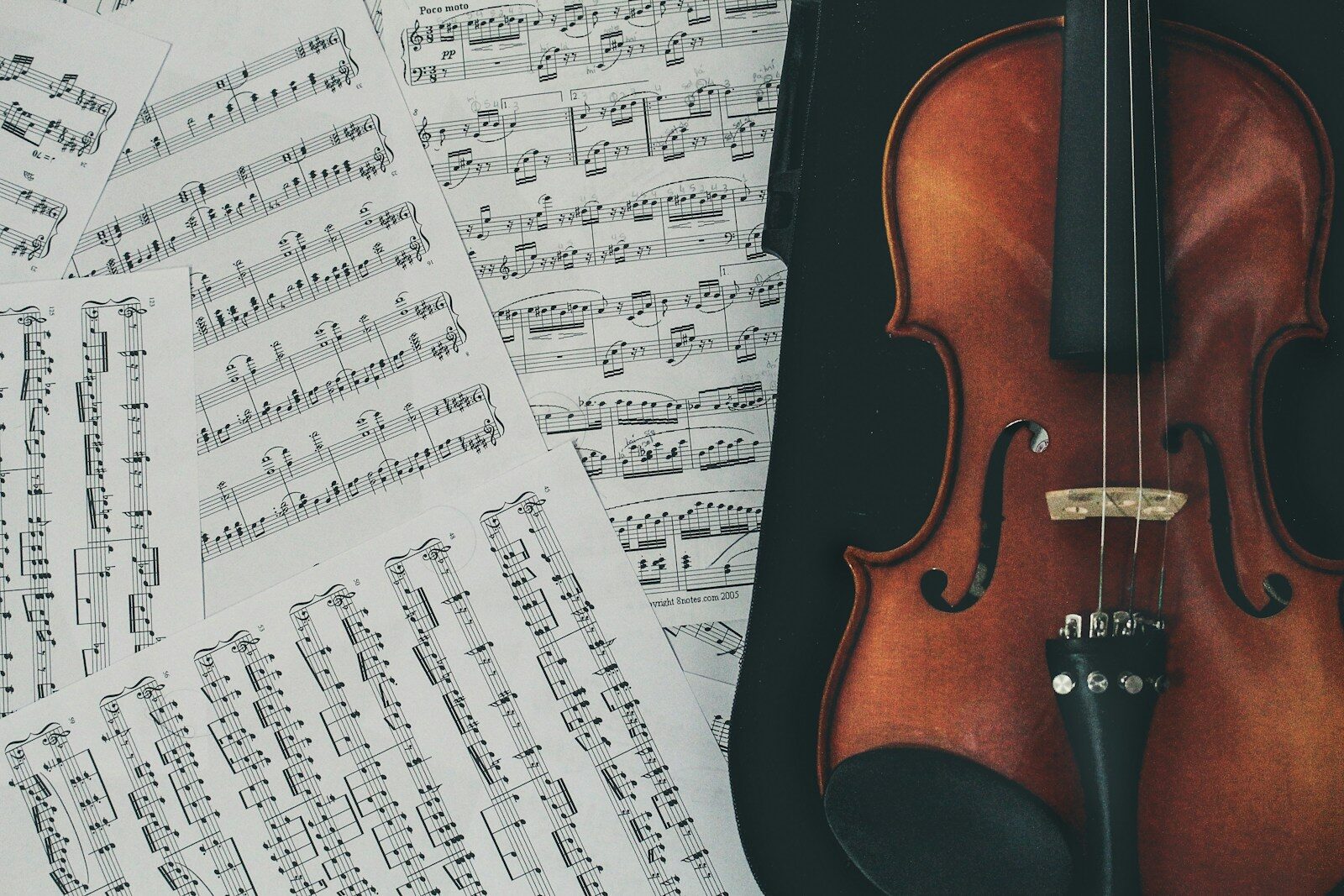
Music Knowledge helps us understand how music works, where it came from, and why different songs sound different. Music is a part of almost every culture in the world. People use music for entertainment, celebrations, religious events, storytelling, dancing, relaxation, and self-expression.
You do not need to be a professional musician to learn about music. Understanding a few basic ideas such as rhythm, melody, harmony, pitch, tempo, and instruments can make listening to music much more interesting.
Music can be simple or complex. A person singing alone can create music, while a large orchestra can use dozens of instruments at the same time. Modern electronic music can also create sounds using computers and digital technology.
In this guide, we will explore music knowledge and facts in simple English and learn about the main elements, instruments, genres, history, and importance of music.
What Is Music?
Music is an art form that uses organized sound and silence. It can include voices, musical instruments, electronic sounds, or a combination of these.
Music is found in many different cultures and traditions. There is no single style of music that represents the whole world.
According to Encyclopaedia Britannica, music is an art concerned with combining vocal or instrumental sounds and is shaped by cultural ideas about elements such as rhythm, melody, and harmony.
This means that music can be understood differently in different cultures. A musical style that sounds unusual to one listener may be completely normal and traditional to another.
Why Is Music Important?
Music has been part of human society for a very long time. It can express emotions that are sometimes difficult to explain with words.
People listen to music when they are:
- Happy
- Sad
- Relaxed
- Excited
- Celebrating
- Working
- Studying
- Exercising
- Remembering important moments
Music is also important for cultural identity. Traditional songs can carry stories, beliefs, languages, and customs from one generation to another.
Music can also bring people together. Concerts, festivals, weddings, religious events, and cultural celebrations often use music as an important part of the experience.
Basic Elements of Music
Learning the basic elements of music is an important part of music knowledge.
Some of the main elements are:
- Rhythm
- Melody
- Harmony
- Pitch
- Tempo
- Timbre
- Dynamics
- Form
Different musical traditions may understand and organize these elements in different ways.
1. Rhythm
Rhythm is the organization of sounds in time.
In simple words, rhythm is the pattern of beats that makes music move.
When you tap your foot along with a song, you are responding to its rhythm.
Drums and other percussion instruments often make rhythm easy to hear, but rhythm can also be created by voices, guitars, piano, clapping, and electronic sounds.
Rhythm can make music feel fast, slow, energetic, calm, or exciting.
2. Melody
A melody is a sequence of musical notes that forms a recognizable musical idea or tune.
When you remember the main tune of a song and sing it without the music, you are remembering its melody.
Melody is one of the easiest parts of music for many listeners to recognize.
A melody can be performed by a singer or by an instrument such as a piano, flute, violin, guitar, or saxophone.
3. Harmony
Harmony happens when different musical notes or parts sound together.
For example, one person may sing the main melody while another singer sings different notes that support it.
Chords are also an important part of harmony.
Harmony can make music sound full, bright, dark, tense, peaceful, or emotional.
4. Pitch
Pitch tells us how high or low a musical sound is.
A high note has a higher pitch, while a low note has a lower pitch.
Pitch is important for singers and instrumentalists because it helps them produce the correct notes.
5. Tempo
Tempo means the speed of music.
A slow song may have a calm or peaceful feeling, while a fast song may feel energetic.
Musicians often use specific terms to describe tempo, and modern music software can also measure tempo in beats per minute, commonly written as BPM.
6. Timbre
Timbre describes the quality or character of a sound.
It is one reason a piano and a violin sound different even when they play the same musical note.
Timbre is sometimes described as the “tone color” of a sound.
The human voice also has different timbres. Two people can sing the same note, but their voices may sound completely different.
7. Dynamics
Dynamics describe how loud or soft music is performed.
A song can become louder to create excitement or softer to create a gentle feeling.
Changes in dynamics are an important part of musical expression.
8. Musical Form
Form is the overall structure of a piece of music.
A song may have an introduction, verse, chorus, bridge, and ending.
Classical music can use more complex forms, while popular music often uses repeated sections that make songs easy to remember.
What Is Music Theory?
Music theory is the study of the ideas and systems used to understand how music is organized.
It can include topics such as:
- Notes
- Scales
- Chords
- Rhythm
- Key
- Harmony
- Melody
- Musical notation
- Musical forms
Music theory can look complicated at first, but beginners can learn it step by step.
Learning basic theory can help musicians understand what they are playing and can also help listeners understand why certain musical combinations create particular effects.
The Smithsonian’s educational music resources introduce concepts such as chords, melody, rhythm, timbre, counterpoint, and musical forms.
Musical Notes and Scales
Musical notes are used to represent different pitches.
In Western music, the basic note names are commonly written as:
A, B, C, D, E, F, and G.
These notes can be organized into different scales.
A scale is a sequence of notes arranged in a particular order.
Different scales can create different musical colors and feelings.
Other musical traditions use different systems for organizing pitch. For example, Indian classical music has concepts such as raga that cannot simply be treated as the same thing as a Western scale.
This is an important point in music knowledge: music systems around the world are not all based on exactly the same rules.
Musical Instruments
Musical instruments are tools used to create musical sounds.
They can be divided into several broad groups.
String Instruments
String instruments create sound through vibrating strings.
Examples include:
- Guitar
- Violin
- Cello
- Harp
- Sitar
- Veena
Wind Instruments
Wind instruments create sound through air movement.
Examples include:
- Flute
- Clarinet
- Saxophone
- Trumpet
- Oboe
Percussion Instruments
Percussion instruments are usually played by striking, shaking, or scraping.
Examples include:
- Drums
- Tabla
- Cymbals
- Xylophone
- Tambourine
Keyboard Instruments
Keyboard instruments use keys to control musical sounds.
Examples include:
- Piano
- Organ
- Keyboard
- Harpsichord
Modern electronic keyboards can produce sounds that imitate traditional instruments or create completely new sounds.
Different Types of Music
There are thousands of musical styles around the world.
Some major categories include:
Classical Music
Classical music includes long traditions of composed and performed music. Western classical music includes composers such as Mozart and Beethoven, while other cultures have their own classical traditions.
Folk Music
Folk music is closely connected with communities and local traditions.
It may be used for festivals, celebrations, work, storytelling, or cultural events.
Jazz
Jazz developed in the United States and is strongly associated with improvisation, rhythm, and interaction between musicians.
Blues
Blues developed from African American musical traditions and had a major influence on later popular music.
Rock Music
Rock became especially popular in the 20th century and developed into many different styles.
Pop Music
Pop music is generally designed for a broad audience and often uses memorable melodies, repeated sections, and modern production.
Electronic Music
Electronic music uses electronic instruments, computers, synthesizers, samplers, and digital production tools.
Hip-Hop
Hip-hop developed as a cultural movement and musical style in the United States and later became a global form of music.
Indian Classical Music
Indian classical music includes major traditions such as Hindustani and Carnatic music, with concepts including raga and tala.
Music Around the World
One of the most interesting parts of music knowledge is learning that different cultures organize music in different ways.
For example, Western music often places strong emphasis on harmony and chord progressions, while many other musical traditions may focus more strongly on melody, rhythm, modes, or other systems.
African musical traditions have contributed greatly to global popular music, particularly through rhythm and other musical practices.
Asian musical traditions include highly developed systems from countries such as India, China, Japan, Indonesia, and others.
The Middle East also has rich musical traditions involving different scales, instruments, rhythms, and performance styles.
This diversity makes world music an important subject for anyone interested in learning about different cultures.
A Short History of Music
Music is much older than recorded history.
Early humans probably used voices, hands, and natural objects to create sounds. Archaeological evidence shows that musical instruments existed thousands of years ago.
As civilizations developed, music became connected with religion, courts, theatre, dance, celebrations, and social life.
Later, musical notation allowed some traditions to preserve compositions in written form.
The development of printing, recorded sound, radio, television, and the internet then changed how music was created and shared.
Today, music can travel around the world within seconds.
How Technology Changed Music
Technology has had a huge impact on music.
The invention of sound recording allowed performances to be preserved and replayed.
Radio made it possible for people to hear music from faraway places.
Television and music videos added visual elements to musical performances.
Computers and digital audio software later transformed music production.
Today, musicians can create complete songs using laptops, microphones, digital instruments, and software.
Streaming platforms have also changed how people discover and listen to music.
Interesting Music Facts
Here are some useful music facts:
- Music exists in virtually every known human society.
- Rhythm, melody, and harmony are important concepts in many approaches to understanding music, although different cultures organize music differently.
- The same musical note can sound different on different instruments because of timbre.
- A melody is not the same thing as rhythm; melody mainly concerns the sequence of pitches.
- Tempo describes the speed of a musical performance.
- Dynamics describe changes in loudness.
- Music can be created with voices, acoustic instruments, electronic instruments, or combinations of them.
- Traditional music can preserve cultural stories and customs.
- Recording technology made it much easier to preserve and study musical performances.
- Modern digital technology allows musicians from different countries to collaborate remotely.
How to Improve Your Music Knowledge
You do not need expensive equipment to start learning about music.
Here are some simple ways to improve your knowledge:
Listen Carefully
Choose different genres and listen to them carefully. Try to identify the rhythm, melody, instruments, and changes in volume.
Learn Basic Music Theory
Start with notes, scales, rhythm, chords, and basic notation.
Learn an Instrument
Even basic practice on a keyboard, guitar, or another instrument can improve your understanding of music.
Explore Different Cultures
Listen to traditional music from different countries. Notice how instruments, rhythms, melodies, and musical structures differ.
Read Reliable Sources
Use museums, universities, cultural organizations, educational websites, and established reference works when researching music history.
Why Music Knowledge Matters
Having basic music knowledge can make listening more enjoyable.
When you understand rhythm, melody, harmony, instruments, and production, you may notice details that you previously missed.
Music knowledge can also help students, singers, musicians, producers, teachers, and anyone interested in culture.
Most importantly, learning about music can help us understand people. Musical traditions often reflect the history, beliefs, language, and experiences of the communities that created them.
Conclusion
Music Knowledge is not only about learning musical notes or playing an instrument. It is about understanding how sound, rhythm, melody, harmony, instruments, culture, and technology work together.
From traditional songs to classical compositions, jazz, rock, hip-hop, pop, electronic music, and modern digital productions, music continues to change.
Learning the basics gives you a better way to listen to and understand music. It also opens the door to the rich musical traditions of different cultures around the world.
Whether you are a beginner, student, music fan, singer, or musician, building your music knowledge can make your experience with music more meaningful.
Frequently Asked Questions
What is music knowledge?
Music knowledge is an understanding of music concepts such as rhythm, melody, harmony, pitch, tempo, instruments, genres, history, and music theory.
What are the basic elements of music?
Commonly discussed elements include rhythm, melody, harmony, pitch, tempo, timbre, dynamics, and form.
What is the difference between melody and rhythm?
Melody is mainly a sequence of pitches that creates a recognizable musical idea. Rhythm organizes sounds and silences in time.
What is music theory?
Music theory is the study of how music is structured and organized, including notes, scales, chords, rhythm, harmony, and musical forms.
Why is music important?
Music can express emotions, preserve cultural traditions, support celebrations and rituals, and bring people together.
Can I learn music without playing an instrument?
Yes. You can develop music knowledge by listening carefully, learning basic theory, studying different genres, and exploring music from different cultures.
For SEO, use external links that lead to legitimate educational, cultural, museum, or government/recognized organization websites. Avoid linking to pirated music-download websites or unauthorized lyrics/music-streaming copies.
- Encyclopaedia Britannica – Music — General reference about music and its history.
- Smithsonian Folkways – Invitation to Music — Educational material covering melody, rhythm, harmony, timbre, and other music concepts.
- Smithsonian Learning Lab – Music Education Standards — Educational resources about musical concepts and analysis.
- Smithsonian Human Origins Program — Information about early human art and music.